Research program
From sensing crops to designing crops.
Four layers turn multi-source observations into a crop that is measurable, explainable, predictable and, eventually, designable. Each layer below links to the projects, papers, notes and tools that support it.
- 2
- projects
- 2
- publications and software
- 11
- research notes
Architecture
Four layers of crop intelligence
My PhD built Layers I–II. My postdoc focuses on the jump from II to III: making crop state not only observable and explainable, but projectable.
Select a layer to filter the projects, notes and tools below.
Projects
Selected projects
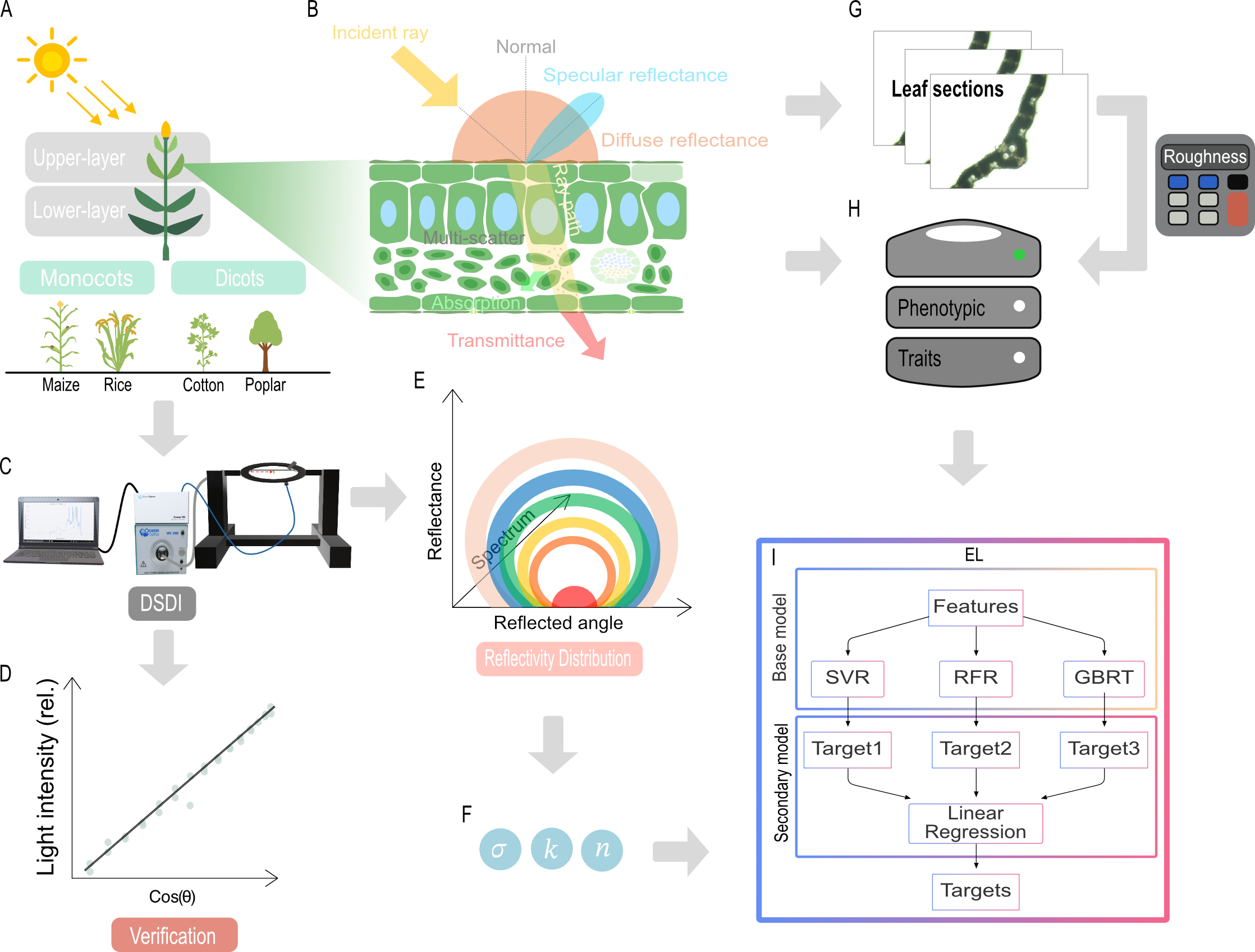
Predicting leaf BRDF from phenotypic traits
Leaf directional reflectance can be predicted from measurable traits, and the resulting differences in leaf optics change how light is distributed inside a simulated canopy.
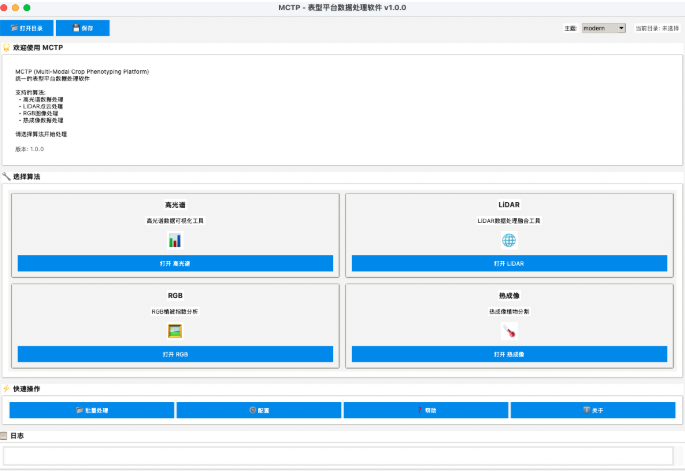
MCTP: a multi-modal crop phenotyping data processing platform
One desktop platform processes hyperspectral, LiDAR, RGB and thermal phenotyping data with a shared interface, interactive parameter tuning, batch processing and structured exports.
Notes
Research notes
- PhenoHUB: A Mobile Toolkit for Digital Plant PhenotypingIDigitize
A WeChat Mini Program for plant phenotyping fieldwork: leaf-angle and land-area measurement, site weather, image analysis, AI-assisted charting and data management in one mobile toolkit.
- Botanical Extract AI Pro: Zero-Shot Plant Background Removal with Multimodal ModelsIDigitize
A web application and batch pipeline that removes plant-image backgrounds without task-specific training, using a multimodal image model with a structured prompt, aspect-ratio matching and file-signature format detection.
- MCTP: A Multi-Modal Crop Phenotyping Data Processing PlatformIDigitize
A desktop platform that processes hyperspectral, LiDAR, RGB and thermal phenotyping data with one interface, interactive parameter tuning, batch processing and structured exports.
- Predicting Leaf BRDF from Phenotypic TraitsIIUnderstand
A measuring and analysis framework that predicts leaf BRDF parameters from phenotypic traits in four species, combining directional spectroscopy, Cook–Torrance fitting, ensemble learning and canopy ray tracing (Plant Phenomics, 2025).
- Quantifying Seeds, Leaves and Other Plant Samples from Images with PythonIDigitize
A local OpenCV method that segments separated plant samples on a uniform background and measures size, shape and colour in calibrated units, with an overlay for every image.
- Single-Image 3D Plant Reconstruction with 3D Generative AI, Evaluated against SfMIDigitize
Generating 3D cotton plants from single photographs with 3D generative AI and evaluating them organ by organ against multi-view SfM reconstructions of the same plants.
- UAV 3D Crop Phenotyping: Cross-Circular Oblique Acquisition, SfM and CanopyPCIDigitize
A UAV workflow for plot-level 3D crop phenotyping: Cross-Circular Oblique flight design, SfM reconstruction, canopy point-cloud processing with CanopyPC, and machine-learning models of crop traits.
- Root Quantify: Interactive Root Image Preprocessing in PythonIDigitize
An interactive OpenCV tool that turns raw root scans and photographs into clean binary images through polygon ROI selection, illumination correction, thresholding and brush-based correction, ready for root-trait software.
- Canopy Photosynthesis Modeling from 3D Plant ReconstructionIIUnderstandIIIPredict
A modular model that reconstructs crop plants from multi-view images, assembles a triangle-facet canopy, simulates its light distribution by ray tracing, and integrates leaf photosynthesis to canopy carbon gain.
- DJI P4 Multispectral to Plot-Level Traits with WebODM and QGISIDigitize
Processing DJI P4 Multispectral imagery into radiometrically documented orthomosaics in WebODM, checking bands in QGIS, and extracting plot-level vegetation indices and texture features.
- 3D Reconstruction of Potted Cotton by Turntable PhotogrammetryIDigitize
A growth-chamber protocol that reconstructs potted cotton plants from two-elevation turntable video with structure from motion, with scale control, colour correction and accuracy assessment.